Simple Decision Frameworks for Financial Planning
Making financial decisions can feel overwhelming. Whether you're deciding on a significant purchase, planning for retirement, or simply trying to manage your monthly budget, a structured approach can make all the difference. This article explores simple decision frameworks to help you navigate financial choices with clarity and confidence.
The Power of Frameworks
Decision frameworks provide a systematic way to evaluate options, consider potential outcomes, and align your choices with your values and goals. By using these frameworks, you can avoid impulsive decisions, reduce anxiety, and increase your overall financial well-being.
Framework 1: The Cost-Benefit Analysis
The cost-benefit analysis is a classic framework for evaluating potential investments or purchases. It involves identifying all the costs and benefits associated with a decision and then comparing them to determine whether the benefits outweigh the costs.
Step-by-Step Guide: Cost-Benefit Analysis
- Define the Decision: Clearly state the decision you need to make (e.g., "Should I buy a new car?").
- Identify Costs: List all the costs associated with the decision, including initial expenses, ongoing maintenance, and opportunity costs (e.g., down payment, insurance, gas, lost investment income).
- Identify Benefits: List all the benefits associated with the decision, both tangible and intangible (e.g., reliable transportation, increased safety, convenience, improved quality of life).
- Quantify Costs and Benefits: Assign a monetary value to each cost and benefit whenever possible.
- Calculate Total Costs and Benefits: Sum up all the costs and all the benefits.
- Compare Totals: If the total benefits exceed the total costs, the decision may be worthwhile.
- Consider Qualitative Factors: Evaluate any non-quantifiable factors, such as emotional impact or personal values.
Example: Consider purchasing a new energy-efficient refrigerator. The costs include the purchase price, installation fees, and potentially a small increase in electricity bills initially. The benefits include lower long-term electricity bills, reduced environmental impact, and potentially a rebate from the energy company. By quantifying these factors, you can determine if the long-term benefits outweigh the upfront costs.
Framework 2: The Opportunity Cost Framework
Every financial decision involves trade-offs. The opportunity cost framework helps you consider what you're giving up by choosing one option over another.
Step-by-Step Guide: Opportunity Cost Framework
- Identify Options: List all the possible options available to you (e.g., "Invest in stocks vs. pay off debt").
- Evaluate Potential Returns: Estimate the potential return or benefit of each option (e.g., potential investment growth vs. interest savings).
- Consider Risks: Assess the risks associated with each option (e.g., market volatility vs. debt accumulation).
- Determine the Best Alternative: Identify the option that offers the highest potential return with acceptable risk.
- Calculate Opportunity Cost: The opportunity cost is the potential return you forgo by choosing a different option.
Example: You have $5,000. Option A: invest in a mutual fund with an estimated annual return of 7%. Option B: pay off a credit card with a 20% interest rate. While the mutual fund offers potential growth, paying off the credit card guarantees a 20% return by eliminating interest charges. In this case, the opportunity cost of investing in the mutual fund is the 20% interest savings you forgo by not paying off the debt.
Framework 3: The Weighted Scoring Model
For more complex decisions with multiple factors, the weighted scoring model allows you to assign weights to different criteria based on their importance.
Step-by-Step Guide: Weighted Scoring Model
- Identify Criteria: List all the relevant criteria for your decision (e.g., price, features, reliability, brand reputation).
- Assign Weights: Assign a weight to each criterion based on its importance to you (e.g., price: 40%, features: 30%, reliability: 20%, brand reputation: 10%). The weights should add up to 100%.
- Rate Options: Rate each option on a scale (e.g., 1-10) for each criterion.
- Calculate Weighted Scores: Multiply each rating by its corresponding weight.
- Calculate Total Scores: Sum up the weighted scores for each option.
- Compare Total Scores: The option with the highest total score is the most favorable based on your criteria and weights.
Example: Choosing between two different financial advisors. Criteria: experience (30%), fees (40%), client reviews (20%), and investment strategy (10%). Rate each advisor on each criterion and calculate the weighted scores to determine which advisor is the best fit for your needs.
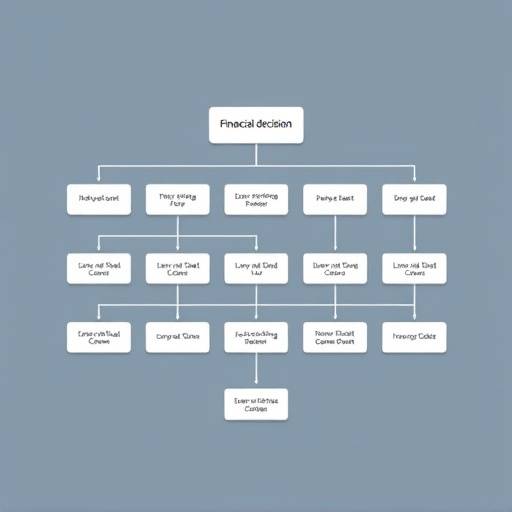
A simplified flowchart illustrating a financial decision-making process, starting with identifying the need or goal, exploring options, evaluating risks and benefits, making a decision, and then reviewing the outcome.
Template: Simple Budgeting Decision Table
| Category | Current Allocation | Proposed Change | Reasoning | Impact on Goals |
|---|---|---|---|---|
| Housing | $1,500 | No change | Adequate and stable. | Supports housing stability. |
| Food | $600 | -$100 | Reduce eating out; prioritize home cooking. | May require more meal planning but supports savings. |
| Transportation | $300 | No change | Necessary for commuting. | Ensures access to work and other essential activities. |
| Entertainment | $200 | -$50 | Reduce non-essential spending; explore free activities. | Frees up money for savings or debt repayment. |
| Savings | $100 | +$150 | Increase savings rate for emergency fund and future goals. | Accelerates progress toward financial security. |
Conclusion
By implementing these simple decision frameworks, you can approach financial planning with greater clarity and intentionality. Remember to adapt these frameworks to your specific needs and circumstances, and always align your decisions with your values and long-term goals. At Sage Finances, we believe that mindful spending leads to a richer, more fulfilling life.
Comments
This article was incredibly helpful! The weighted scoring model is something I'll definitely be using when choosing a new investment platform.
I appreciate the practical examples provided. It's much easier to understand the frameworks when you see them applied to real-life situations.
As someone new to financial planning, this breakdown was really accessible. Thank you for making complex concepts easier to understand!